Healthcare organizations are increasingly focused on sustainability, environmental responsibility, and reducing the downstream impact of pharmaceutical waste. From hospitals and clinics to long-term care facilities and community health programs, medication disposal is no longer viewed only as an operational or compliance issue. It is also an environmental priority.
Unused and expired medications can create risk when they are not handled through appropriate disposal pathways. When medications are flushed, poured down drains, thrown away improperly, or left unsecured for extended periods, active pharmaceutical ingredients can enter the environment and contribute to contamination concerns in waterways, soil, and local ecosystems.
For healthcare leaders, the challenge is finding ways to make medication disposal safer, easier, and more environmentally responsible without disrupting the systems already in place.
That is where drug deactivation can play an important complementary role.
The Environmental Risk of Improper Medication Disposal
Every healthcare facility manages a constant flow of medications. Some are administered in full. Others are partially used, discontinued, expired, or no longer needed. When these medications remain active after use, they need to be handled carefully to reduce potential environmental exposure.
Improper disposal practices can create several risks:
- Medications flushed into wastewater systems may contribute to pharmaceutical residues in water sources.
- Liquid medications poured down sinks can enter drainage and treatment systems.
- Unused medications placed in general trash without deactivation may remain active and accessible.
- Medications stored for long periods before final disposal can increase operational complexity and handling requirements.
While many healthcare organizations already have responsible collection and disposal programs in place, the environmental opportunity is to reduce the amount of active medication that remains in circulation before final disposal occurs.
Why Water Supply Protection Matters
Many wastewater treatment systems were not specifically designed to remove all pharmaceutical compounds. Even small amounts of medication residue can contribute to broader environmental concerns when multiplied across facilities, households, and communities.
This is especially relevant for medications such as opioids, antibiotics, hormones, and other prescription drugs that may remain biologically active after disposal. When these substances enter water systems, they can potentially affect aquatic life and contribute to long-term environmental burden.
For healthcare organizations, protecting the water supply means taking action earlier in the disposal process. It means reducing reliance on practices such as flushing or drain disposal and making it easier for staff, patients, and communities to deactivate medications before they have a chance to enter the environment.
Drug Deactivation as a Complementary Sustainability Layer
Many healthcare organizations already use centralized collection programs, take-back solutions, reverse distribution, or other approved disposal pathways. These systems remain important parts of responsible medication waste management.
Deterra® is not intended to replace those programs.
Instead, Deterra can serve as a complementary sustainability layer that helps deactivate unused medications earlier in the workflow. By using proprietary activated carbon technology, Deterra helps render medications non-retrievable and unavailable for misuse, while also reducing the risk of active pharmaceutical ingredients entering the water supply through improper disposal.
This makes Deterra especially useful in situations where medications need to be addressed closer to the point of use, such as:
- Patient discharge processes
- Post-procedure medication disposal
- Long-term care and hospice environments
- Community health and prevention programs
- Home-use medication disposal initiatives
- Medication cleanout campaigns
- Public health distribution programs
In each of these scenarios, drug deactivation can help reduce the environmental risk of unused medication while supporting broader sustainability and safe disposal goals.
Reducing the Risk of Flushing and Drain Disposal
For years, flushing was commonly used as a quick way to dispose of certain medications. Today, healthcare organizations are increasingly moving away from flushing whenever possible because of the potential impact on wastewater systems and the environment.
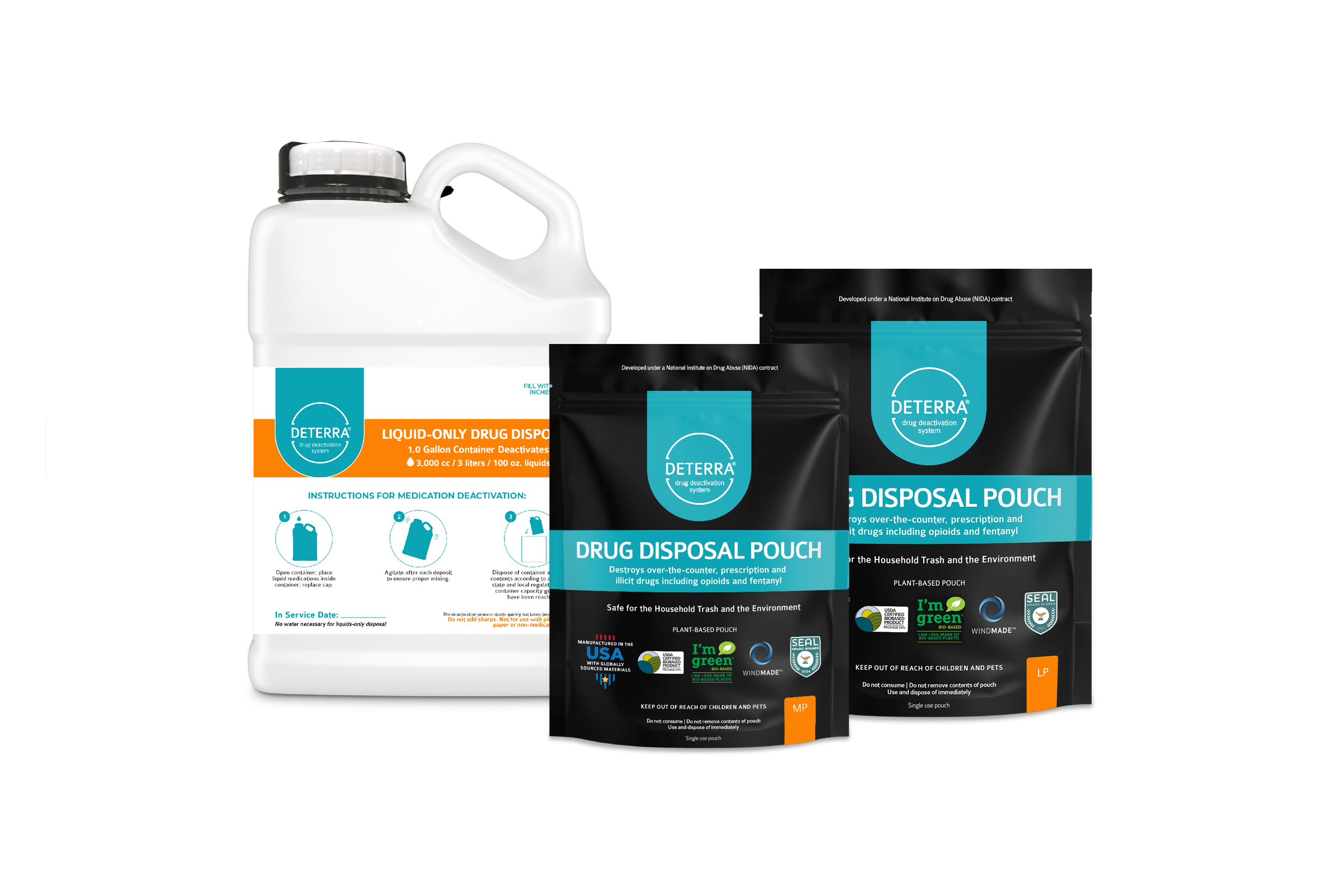
Deterra helps address this challenge by making medication deactivation simple and accessible. The process is straightforward:
- Place the unused medication in the Deterra pouch.
- Add water.
- Seal and shake.
- Dispose of the pouch according to applicable guidelines and facility policy.
By making safe disposal easier at the point where the medication is no longer needed, healthcare organizations can reduce the likelihood that unused medications are flushed, poured down drains, or discarded while still active.
Supporting Partner Sustainability Goals
Sustainability in healthcare often requires multiple solutions working together. Centralized collection, responsible downstream disposal, community take-back programs, and drug deactivation can each support different parts of the medication waste management process.
Deterra aligns well with these broader sustainability efforts because it focuses on reducing the risk of active medication exposure before disposal. This can complement existing collection and disposal infrastructure by helping ensure medications are deactivated earlier, especially in settings where immediate access to a centralized disposal option isn’t always available.
Rather than replacing established disposal programs, Deterra can help strengthen them by supporting safer behavior at the point of need.
For healthcare organizations and partners focused on environmental responsibility, this creates a more complete approach:
- Collection programs support structured medication disposal.
- Downstream disposal partners support responsible final handling.
- Drug deactivation helps reduce active medication risk earlier in the process.
Together, these approaches can help reduce environmental impact while supporting safer and more sustainable medication disposal practices.
A Practical Tool for Healthcare Sustainability Programs
Healthcare sustainability teams are often tasked with reducing waste, improving environmental stewardship, and supporting safer operational practices across the organization. Medication disposal can be a meaningful part of that strategy.
Deterra can support sustainability programs by helping organizations:
- Reduce improper medication disposal behaviors
- Limit the risk of medications entering wastewater systems
- Support education around safe medication disposal
- Provide patients and caregivers with an easy disposal option
- Strengthen community-facing environmental health initiatives
- Reduce the amount of active medication remaining after use
Because Deterra is easy to distribute and simple to use, it can be incorporated into a range of healthcare and public health programs. Facilities can use it as part of discharge planning, outpatient care, community education, medication take-home materials, or internal sustainability initiatives.
Extending Environmental Responsibility Beyond the Facility
Medication disposal does not stop at the facility door. Many patients leave healthcare settings with prescriptions, partial fills, or medications they may not finish. Without clear disposal instructions, unused medications may remain in the home, be thrown away improperly, or eventually enter the water supply.
Providing patients with a drug deactivation option helps extend environmental responsibility beyond the clinical setting.
For example, Deterra can be included in:
- Discharge kits
- Post-surgical care instructions
- Opioid stewardship programs
- Community education campaigns
- Pharmacy counseling materials
- Public health outreach programs
This helps patients and caregivers take immediate action when medications are no longer needed, reducing the risk of improper disposal and supporting safer communities.
Building a More Sustainable Medication Disposal Workflow
No single solution solves every medication disposal challenge. Healthcare organizations need flexible, layered strategies that support compliance, safety, sustainability, and operational ease.
Deterra helps fill an important role within that broader ecosystem. By deactivating unused medications before they can be flushed, poured down drains, or discarded while still active, Deterra supports a more environmentally responsible approach to medication disposal.
For healthcare organizations, this is not about replacing existing systems. It is about strengthening them.
By adding drug deactivation to current medication disposal and sustainability programs, facilities can help protect the water supply, reduce environmental exposure, and make safe disposal easier for staff, patients, and communities.
Medication disposal is a small action with a significant environmental impact. When healthcare organizations make that action simple, accessible, and responsible, they take an important step toward protecting both public health and the planet.