
The overdose crisis in America is far from over. While drug overdose deaths have declined for three consecutive years — falling to roughly 70,000 in 2025, the uncomfortable truth is the majority of misused prescription drugs don’t come from a dealer on a street corner. They come from a medicine cabinet. A nightstand. A kitchen drawer. Billions of unused pills are sitting in American homes right now — unsecured, unmonitored, and available to anyone who opens the bottle.
Drop-off programs and community take-back efforts are valuable, but they may not reach every household that needs an immediate at-home option. Flushing and household trash are not always the strongest fit for every medication disposal scenario, which is why communities often look for safer, more structured options.
The Shift From Disposal to Deactivation
This is where the distinction between disposal and deactivation matters.
Many disposal programs focus on collecting and removing medications from the home. Drug deactivation adds another layer by rendering medications unusable at the household level before they ever enter a broader collection stream. That means the medications remain active until they reach their final disposal destination, which is why some programs may also want an at-home option that can be used immediately.
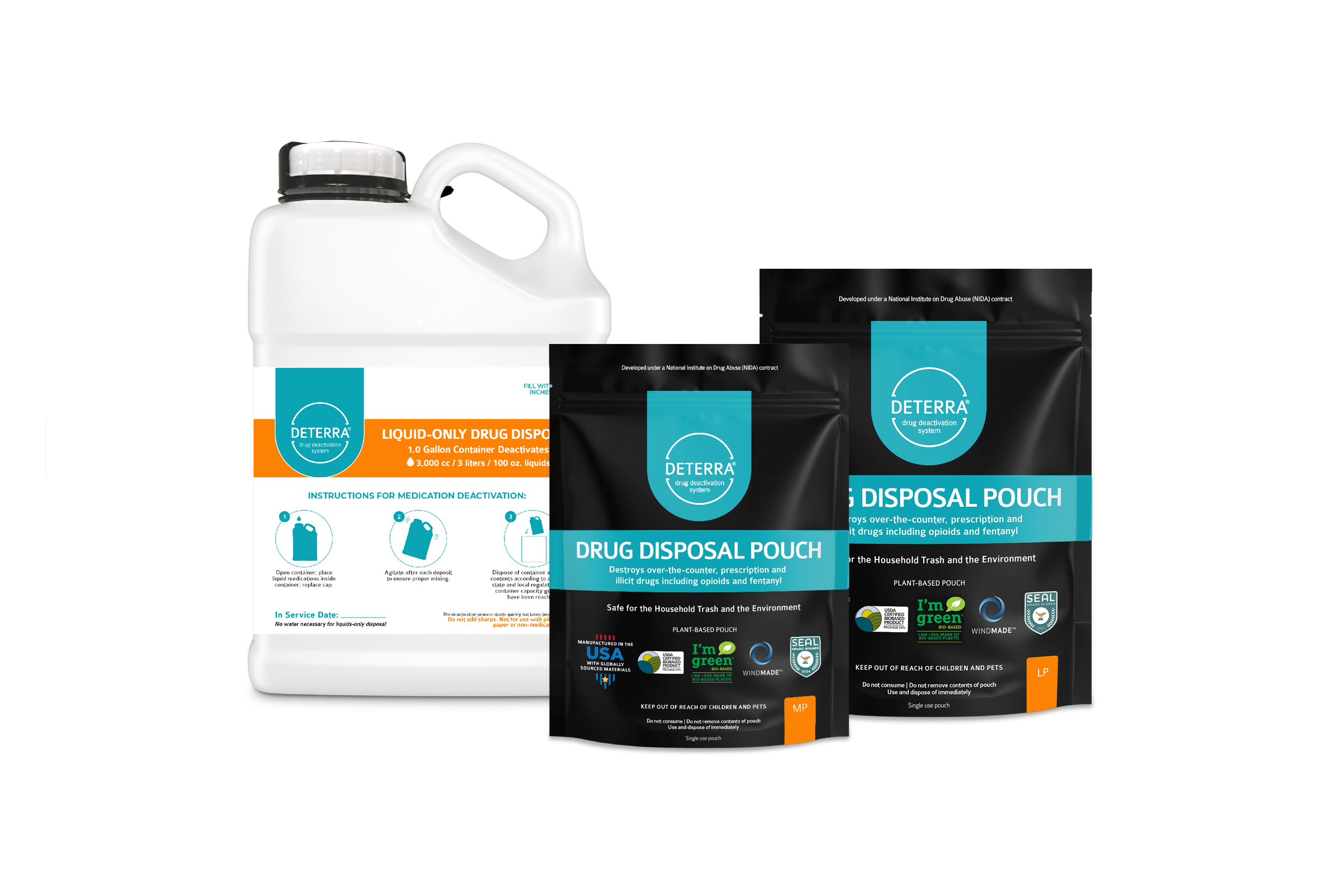
Deterra® works differently. Its patented, activated-carbon formula chemically binds to medications — pills, patches, liquids, creams, and films — and permanently deactivates them. Once processed, the drugs can’t be extracted, reconstituted, or misused. The result is a deactivated substance that can support safe household disposal as part of a broader medication stewardship strategy.
It takes three steps: place medications in the pouch, add water, seal, and shake. Thirty seconds. Done.
Programs that depend on travel, timing, or a specific drop-off location may not reach every household that needs support, which is why many communities benefit from adding an at-home option. An at-home system that works in under a minute removes every barrier between an unused bottle of oxycodone and permanent deactivation.
Where Deterra Fits in the Funding Landscape
Safe medication disposal programs, including drug deactivation initiatives, may qualify as fundable expenses under opioid settlement guidelines and multiple federal grant programs. Deterra programs align with the most commonly approved expenditure categories:
Household Safety — Removing accessible drugs from homes can help reduce the amount of unused medication available for diversion or accidental ingestion.
Prevention & Education — Deterra offers a full-service Prevention & Education Program, including co-branded materials, community outreach support, and household mailing campaigns.
Public Safety — Law enforcement agencies and first responders can distribute Deterra pouches during wellness checks, community events, and as part of diversion-prevention initiatives funded through DOJ and COPS programs.
Environmental Health — By providing a landfill-safe alternative to flushing, Deterra helps municipalities reduce pharmaceutical contamination of water systems.
Community-Based Programs — Household mailing programs deliver disposal pouches directly to at-risk populations, reaching people who would never visit a drop-off site.
Key federal funding sources that have supported Deterra programs include SAMHSA State Opioid Response (SOR) Grants, STOP Act and CARA Grants, BJA Comprehensive Opioid and Substance Use Programs, HRSA Rural Communities Opioid Response funding, and American Rescue Plan Fiscal Recovery Funds.
Deterra also publishes a comprehensive Grant Guide to help agencies identify opportunities and build applications — available as a free download on their website.
Practical Use Cases for Government Agencies
The versatility of Deterra’s product line — pouches, liquid containers, and bulk options — means it can be deployed across a wide range of government programs:
State and county health departments can launch household mailing programs that deliver co-branded disposal pouches directly to homes in high-risk ZIP codes. Deterra manages fulfillment, customization, and reporting.
Law enforcement and first responders can distribute pouches at community events, during follow-up visits after overdose calls, and as part of drug take-back alternatives that extend reach beyond a single annual event.
Prevention coalitions and community organizations funded by SAMHSA or state grants can integrate Deterra into their outreach kits alongside educational materials — giving households both the knowledge and the tool to act.
School-based prevention programs funded through STOP Act or CARA grants can send pouches home with students, engaging entire families in a conversation about medication safety.
Veterans’ services and military health systems can address the elevated rates of prescribed opioids among veteran populations by including Deterra alongside discharge and pain management plans.
The Case for Acting Now
The decline in overdose deaths is real and encouraging. But researchers and public health officials are already warning about a potential plateau — and the risk of normalizing a death toll that would have been unthinkable a decade ago.
Federal budget pressures are mounting. Grant programs that supported local prevention efforts are being restructured or reduced. The opioid settlement funds represent a time-limited, dedicated resource specifically earmarked for this crisis.
Deploying those funds toward a scientifically proven, at-home drug deactivation system isn’t just a defensible use of the money. It’s one of the most direct, measurable prevention actions a local government can take: remove the drugs from homes before they become a problem.
Every pouch used is a bottle of medication that will never be diverted, never be accidentally ingested by a child, and never enter the water supply.