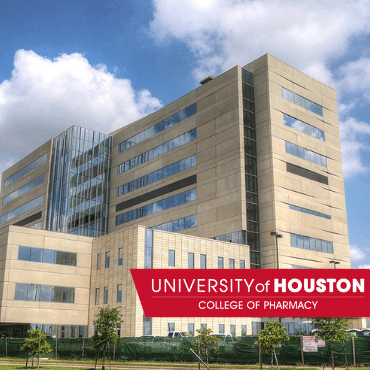
Since December 2018, the University of Houston College of Pharmacy’s Prescription Drug Misuse Education and Research (PREMIER) Center has worked to address the prescription drug misuse crisis in Texas through education, research, outreach efforts, and the distribution of safe prescription medication disposal resources like Deterra® Drug Deactivation and Disposal System to encourage Texans to dispose of their unneeded prescriptions in a safe and environmentally responsible way.
The PREMIER Center team, directed by Douglas Thornton, PharmD, PhD, BCPS, and Assistant Director, Matt Wanat, PharmD, BCPS, BCCCP, FCCM, enlisted prevention-focused community coalitions (CCP’s) to distribute Deterra Pouches in their communities. When the COVID-19 pandemic hit, the PREMIER Center pivoted from focusing primarily on in-person events to directly distributing Single Use Disposal Systems (SUDS) through community partners, including fire departments, public health offices, school nurses, hospitals and pharmacies. Pharmacy students at the University of Houston assisted with outreach to pharmacies in Harris County to distribute pharmacist pocket cards, patient education materials, and SUDS to promote counseling and safe disposal.
“Social distancing measures highlighted the urgency of making sure every household in Texas knows how to safely remove leftover prescriptions and has the means to do so 365 days a year,” says Danielle Campbell, Sr. Project Manager at the PREMIER Center. “It’s not enough to only educate people on the dangers of prescription drug misuse; we have to give them the tools to prevent it themselves. The Texas Improved Information and Dissemination of Single Use Disposal (TIDES) project allowed us to provide these organizations with free Single Use Disposal options to distribute to the public so they can remove expired and unused prescriptions from their medicine cabinets.”
To measure the impact of the SUDS distribution efforts, the team worked with Deterra to create a postcard with a three-question survey adhered to each Deterra Pouch. The survey can be completed on the postcard and mailed back, or individuals could scan the QR code to complete it electronically. The completed postcard gives the team an understanding of what the public is using the disposal systems for, and it allows the team to evaluate their distribution efforts across Texas.
The project is funded through the Texas Health and Human Services Commission by a Texas Targeted Opioid Response (TTOR) grant from the Substance Abuse and Mental Health Services Administration (SAMHSA). Data collected from the surveys is critical to illustrating the impact of the program in reports to SAMSHA. To date, 238,095 Single Use Disposal Systems including 110,745 Deterra Pouches have been distributed throughout Texas.
“Being able to share hard numbers about the outcome of your efforts is extremely important in grant-funded projects like this, so providing an easy-to-use service like the custom postcard surveys is something that makes a lot of sense for us,” says Rob Reynolds, a retired police chief and 31-year veteran of law enforcement who now serves as Deterra’s Director of Advocacy.
Campbell notes that Deterra’s environmental impact is also key to its appeal. Deterra System’s innovative plant-based pouches use organic, proprietary activated carbon to permanently destroy the active ingredients in medications to prevent contamination of landfills and water systems.
“For Texans, it needs to be environmentally friendly. We receive emails, phone calls and letters from Texans who tell us how important it is for them to be able to dispose of their prescriptions while keeping the environment safe,” says Campbell. “Flushing or mixing the prescriptions with kitty litter or coffee grounds does not destroy the active ingredients in prescriptions but using SUDS such as Deterra helps keep unused prescription medications from contaminating our soil and water.”
Learn more about the program at the PREMIER Center website or contact Danielle Campbell at (713) 743-7016 or dscampbe@central.uh.edu.
Visit DeterraSystem.com/government to explore how other organizations are using Deterra or reach out to (612) 568-1128 or Sales@DeterraSystem.com to discuss how to implement at-home drug disposal initiatives in your community.